
Caberdost 0.5 mg Tablet (Cabergoline): Uses, Benefits, Side Effects, Precautions and Export Information
1. Introduction to Caberdost 0.5 mg
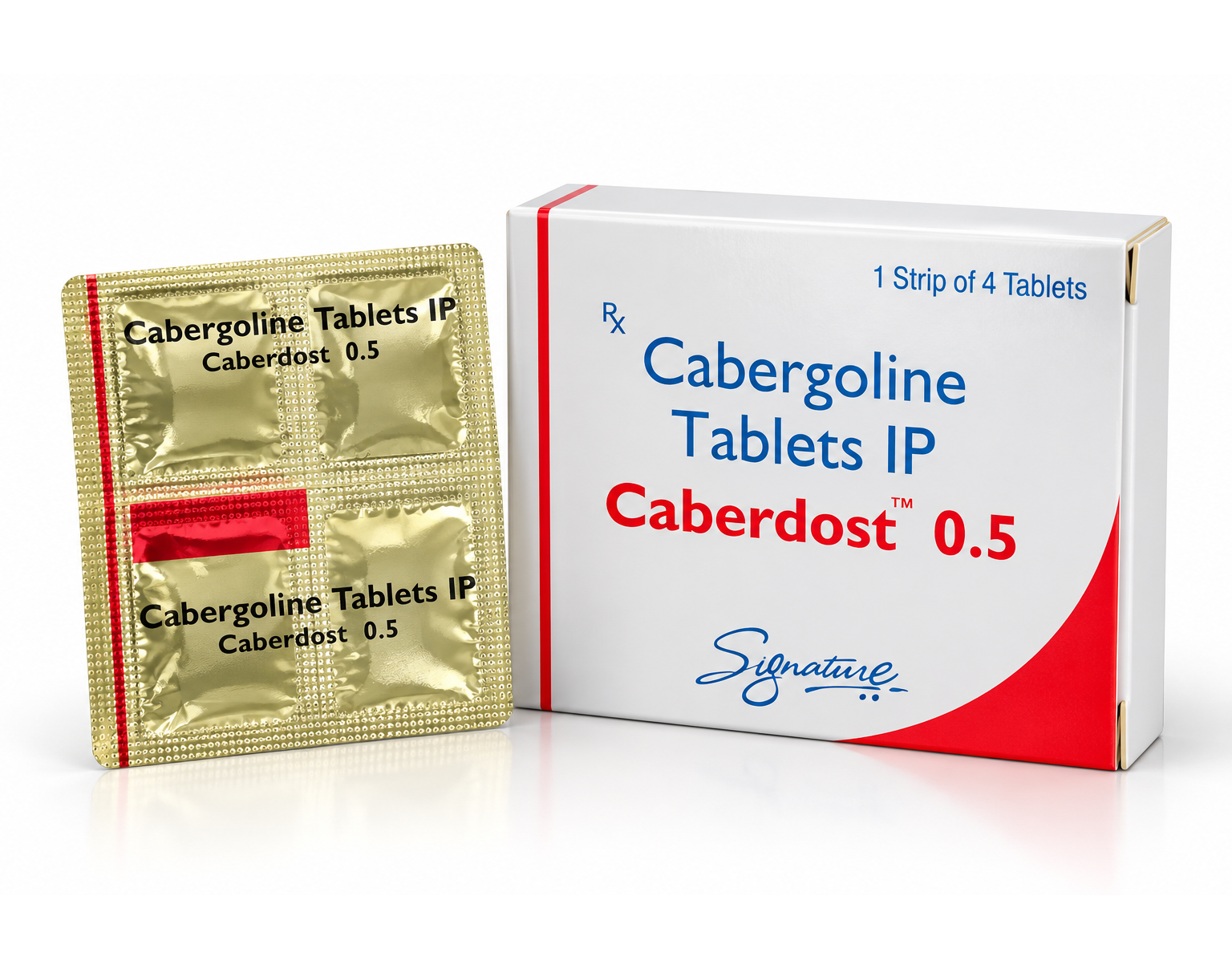
Caberdost 0.5 mg is a brand-name product associated with cabergoline, a dopamine agonist used to manage certain medical conditions involving elevated prolactin levels. Prolactin is a hormone produced by the pituitary gland that plays an important role in breast milk production and reproductive function.
Cabergoline works by stimulating dopamine receptors, which helps reduce prolactin secretion. Doctors may prescribe it for hyperprolactinaemia, a condition in which prolactin levels are higher than normal.
At Meds Connect India, we provide pharmaceutical sourcing and export coordination services from India, with a focus on product information, customer communication and international supply enquiries. Product availability, manufacturer details, packaging and export eligibility must be confirmed before an order is accepted.
2. Product information at a glance
Feature Details
Brand Caberdost
Strength 0.5 mg
Active ingredient Cabergoline
Drug class Dopamine agonist; ergot derivative
Dosage form Tablet
Route Oral
Primary medical use Management of certain hyperprolactinaemic disorders
Storage Follow the manufacturer's package insert
Availability Subject to stock, prescription requirements and destination-country regulations
3. What is Cabergoline used for?
Cabergoline is prescribed for specific conditions associated with excessive prolactin production. These may include:
• Hyperprolactinaemia: Helps reduce abnormally elevated prolactin levels.
• Menstrual irregularities associated with high prolactin: Treatment may help restore normal menstrual function when elevated prolactin is the underlying cause.
• Fertility problems associated with high prolactin: Reducing prolactin may improve reproductive function in appropriately selected patients.
• Galactorrhoea associated with hyperprolactinaemia: May help reduce inappropriate milk production when caused by elevated prolactin.
• Prolactin-secreting pituitary adenomas: May help control prolactin secretion and, in some patients, reduce tumour size.
The suitability of treatment depends on the diagnosis and the patient's medical history. Cabergoline is not appropriate for every cause of menstrual irregularity, infertility or breast discharge.
4. How does Cabergoline work?
Cabergoline acts on dopamine D2 receptors in the pituitary gland. Dopamine normally inhibits prolactin secretion, and cabergoline mimics this effect.
When prolactin levels decrease, symptoms caused by excessive prolactin may improve. The response varies depending on the underlying condition, treatment duration and individual patient factors.
A doctor may recommend blood tests to measure prolactin levels and additional investigations when necessary.
5. Potential benefits of Caberdost 0.5 mg
When prescribed for an appropriate medical condition, cabergoline may offer several benefits:
1. Helps control elevated prolactin
It can lower prolactin levels in patients with hyperprolactinaemia.
2. May improve menstrual regularity
Some patients experience improvement in menstrual disturbances caused by excessive prolactin.
3. May support fertility treatment
In patients whose fertility difficulties are linked to elevated prolactin, treatment may help restore normal reproductive function.
4. May reduce related symptoms
Treatment may help improve symptoms such as inappropriate milk discharge and certain hormone-related sexual or reproductive problems.
5. May help manage prolactin-secreting pituitary tumours
Under specialist supervision, cabergoline can help control hormone secretion and may reduce tumour size.
These benefits are not guaranteed, and cabergoline should only be used when medically indicated.
6. Possible side effects and disadvantages
Cabergoline can cause side effects. Commonly reported effects include:
• Nausea
• Headache
• Dizziness or light-headedness
• Constipation
• Fatigue or weakness
• Indigestion or abdominal discomfort
• Vomiting
• Low blood pressure, particularly when standing up
Some people experience sleepiness or sudden sleep episodes. Patients should avoid driving or operating machinery if affected.
Serious risks
Although less common, serious complications can occur, including:
• Heart valve disorders
• Fibrotic disorders affecting the heart, lungs or other tissues
• Severe or persistent low blood pressure
• Changes in behaviour, impulse control or mental state
• Allergic reactions
Seek urgent medical attention for difficulty breathing, chest pain, fainting, severe swelling or other symptoms suggesting a serious reaction.
Longer-term treatment may require monitoring, including assessment of heart valve health when indicated by prescribing guidance and the patient's circumstances.
7. Precautions before taking Cabergoline
Before starting treatment, inform your doctor if you:
• Have high blood pressure or episodes o